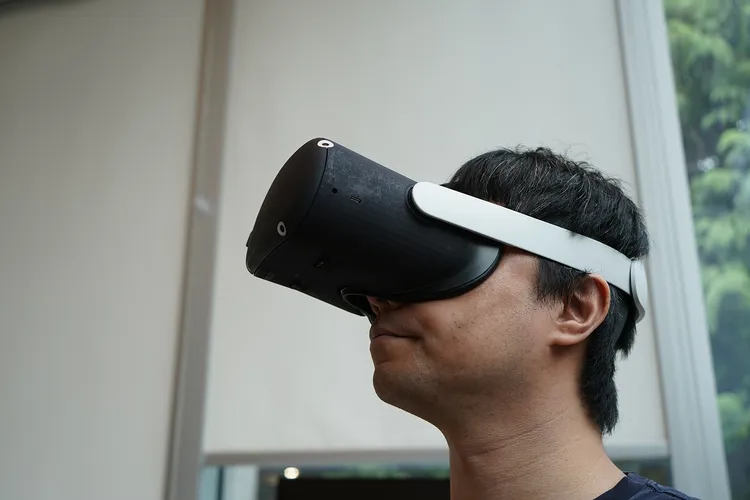
Tiramisu: Hyperrealistic VR
Lead Product Design Prototyper
Tiramisu is a research prototype that achieves "Visual Turing Test" levels of fidelity through industry-leading pixel density and high-dynamic-range brightness.
Developed by the Optics, Photonics, and Light Systems (OPALS) team at Meta Reality Labs, Tiramisu is a research prototype dedicated to achieving absolute visual realism. As the Lead Product Design Prototyper, I was responsible for proving that high-fidelity content could actually be delivered at these extreme resolutions, bridging the gap between cutting-edge hardware and a viable user experience.
Experience Design & Performance Optimization
While the hardware team focused on breaking optical records, my role was to define what the “Visual Turing Test” actually looked like in practice.
Proving UE5 Feasibility at 90 PPD
One of the primary technical hurdles for Tiramisu was the widespread skepticism regarding the feasibility of running Unreal Engine 5 content on such an extreme resolution display. Prior to this demo, it was generally believed that the compute requirements for rendering high-fidelity UE5 environments at 90 PPD were too high for a smooth VR experience.
I proved that this was achievable through extensive performance tuning and optimization. While the final builds still didn’t reach the industry-standard 70-90 FPS, the experience remained visually stable and free of jitter, with a visual quality that consistently amazed viewers. To further push the boundaries, we eventually upgraded to RTX 4090 and 5090 GPUs. While this hardware transition, combined with DLSS, provided a significant leap in asset loading speeds, it underscored the immense rendering burden that 90 PPD presents even to top-tier consumer hardware.
Defining the Value of “Retinal+” Resolution and HDR
Before Tiramisu, Meta had showcased several high-resolution prototypes internally, but many users found it difficult to distinguish the benefits of moving from 60 PPD “retinal” resolution to 90 PPD.
This demo was critical in shifting that perception. By moving away from the simplified visual styles common in current VR applications and embracing high-dynamic-range, high-resolution UE5 content, I made the benefits of 90 PPD and HDR undeniable. It proved that the “Visual Turing Test” cannot be achieved by hardware alone; it requires a new class of high-fidelity content designed specifically to leverage these advanced display technologies.
Hardware & Optical Architecture
The OPALS team designed Tiramisu to push the physical limits of resolution, brightness, and contrast, prioritizing absolute fidelity over traditional headset form factors.
Breaking the 60 PPD Barrier
- 90 PPD Resolution: Tiramisu achieves a staggering 90 PPD, eliminating visible pixelation and aliasing even under intense scrutiny.
- HDR Brightness: The display reaches 1,400 nits, approximately 14 times brighter than a standard Quest 3, enabling true High Dynamic Range (HDR) experiences.
- Contrast & Color: Utilizing Micro-OLED technology, the prototype offers 3x the contrast of current consumer headsets, with deep, true blacks.
Optics Over Form Factor
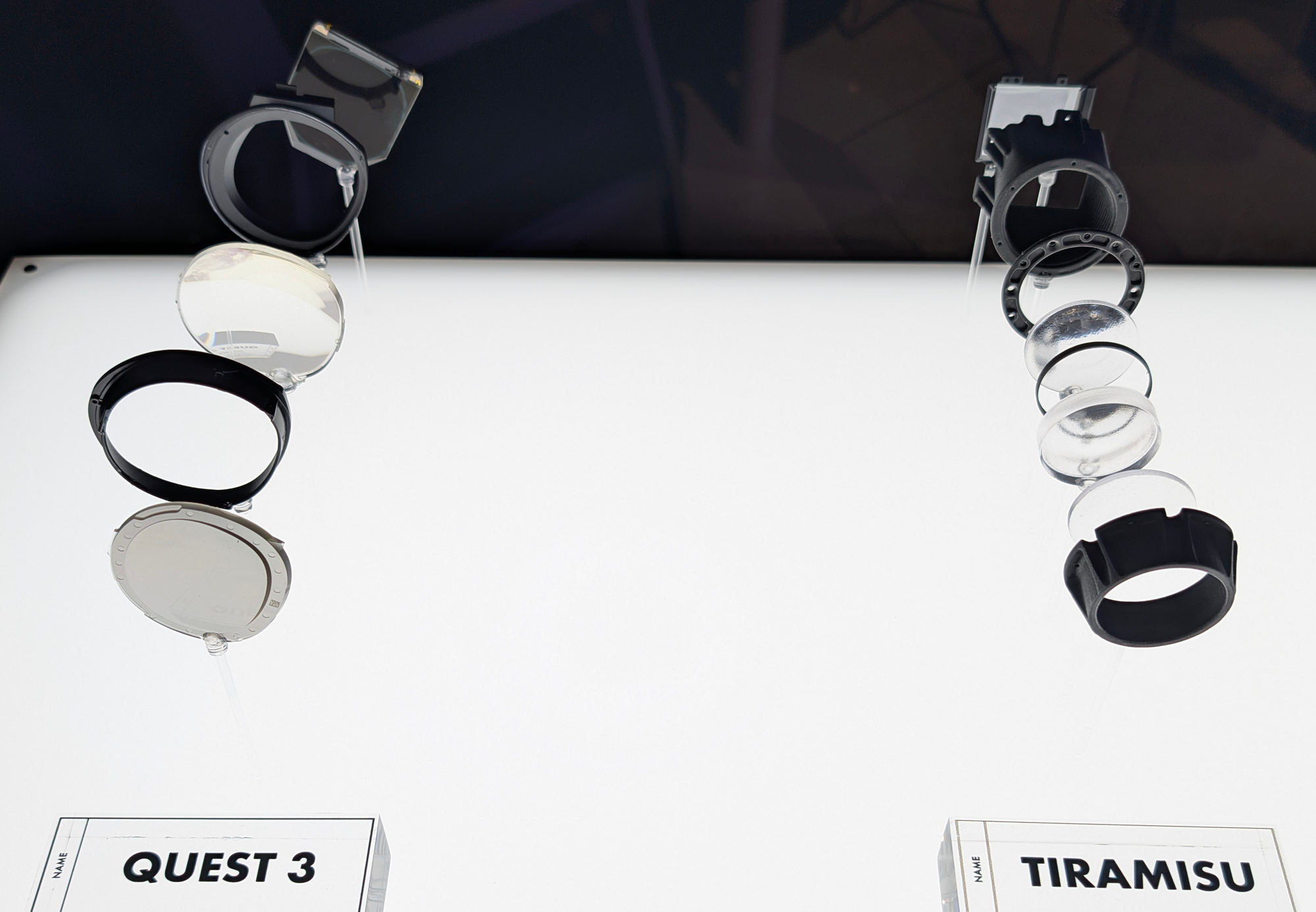
To maintain maximum light efficiency, Tiramisu eschews pancake lenses in favor of custom refractive lenses made from high-refractive-index flint glass.
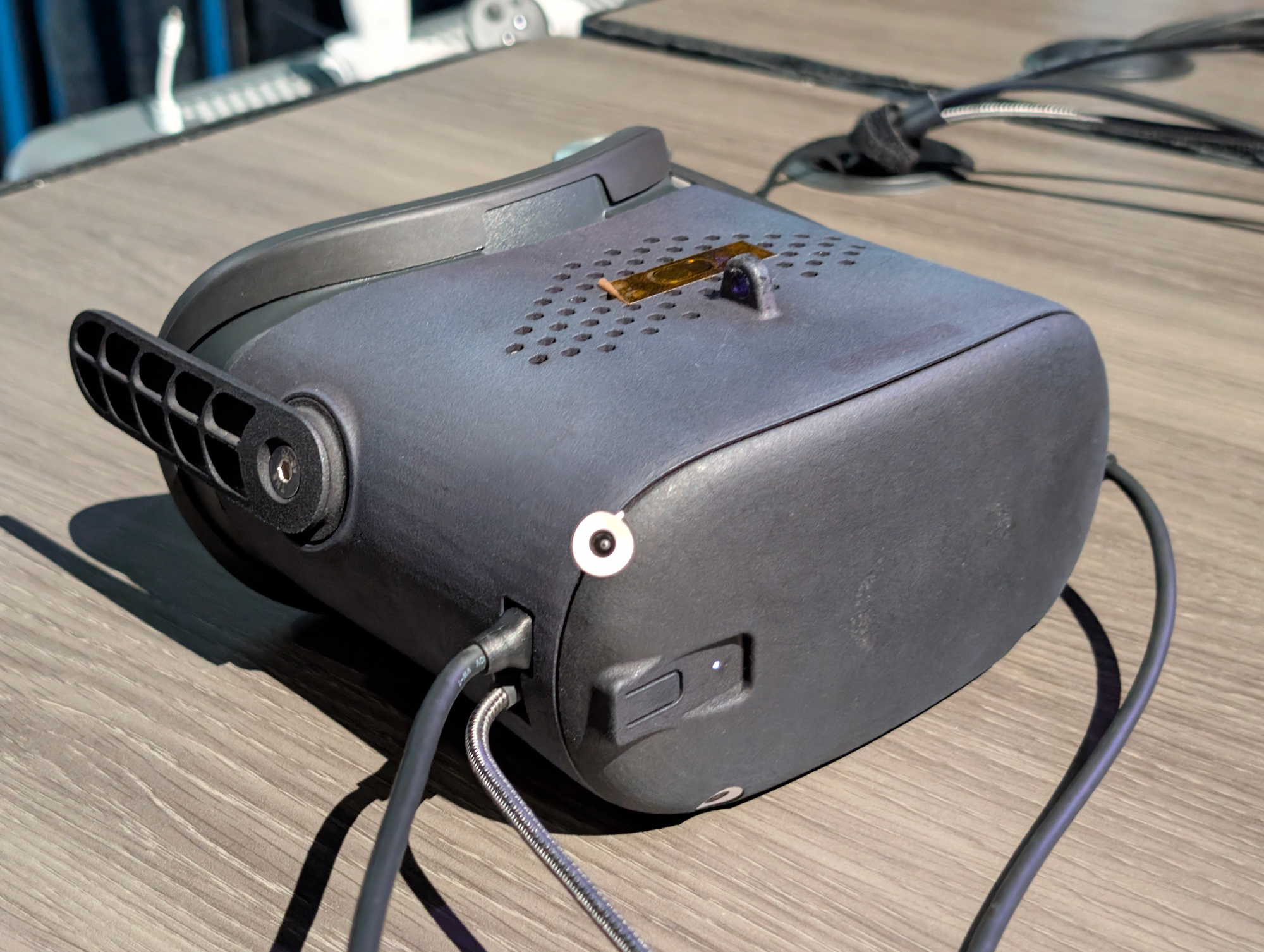
This decision results in a handheld “binocular” form factor with a 63mm thick lens stack and a focused 33° × 33° window of hyper-realism.
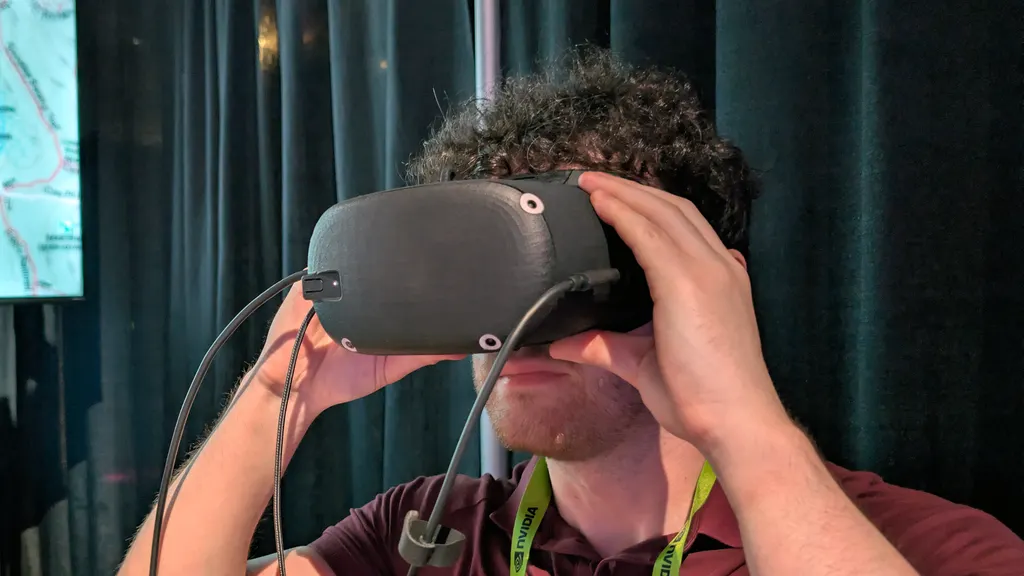
Hands-On: Meta's 90 PPD Tiramisu Prototype
Testing the limits of visual fidelity with a display that surpasses the human eye's resolution limit.
SIGGRAPH 2025: Ultrawide FOV and Hyperrealistic VR
Meta Reality Labs Research previews the future of display systems with Boba 3 and Tiramisu.